Observe
Observe systematically
Learn to assess brood, stores, and colony dynamics. Record your observations to track changes over time.

Practical beekeeping courses
Move from theory to on-the-ground decision-making. Track the development of the colonies over time with guidance from a beekeeper.
Limited spots · Admission by interview

An evolving experience
Returning to the same apiary makes it possible to see what changes, understand the effects of the interventions, and adapt decisions to the needs of the colonies. It is this continuity that gives the training its value.
Observe
Learn to assess brood, stores, and colony dynamics. Record your observations to track changes over time.
Understand
Relate your knowledge to the situations you encountered. Discuss the interventions and their relevance with your supervisor.
To practice
Repeat the actions, take part in the work, and gradually develop your independence in the apiary.
The seasonal journey
Regular monitoring takes place from mid-May to mid-September, with inspections scheduled every two weeks. It continues with autumn work and winterization in November.
Approximately 12 full days in total. The schedule and activities are adapted to the weather and the needs of the colonies.
Mid-May
Discover the apiary and take part in the initial inspections. Observe the condition of the colonies and begin monitoring them.
Spring and summer
Document your observations, participate in the creation of nuclei and necessary health interventions, under supervision.
Late summer and autumn
Participate in the honey harvest and extraction, then in feeding and preparing the colonies for winter.
November
Take part in the wintering process and make the connection between the season's decisions and the preparation of the colonies for the cold.
Two levels of responsibility
The selected plan takes into account your experience and your ability to provide regular monitoring of the colonies.
Learn with a beekeeper
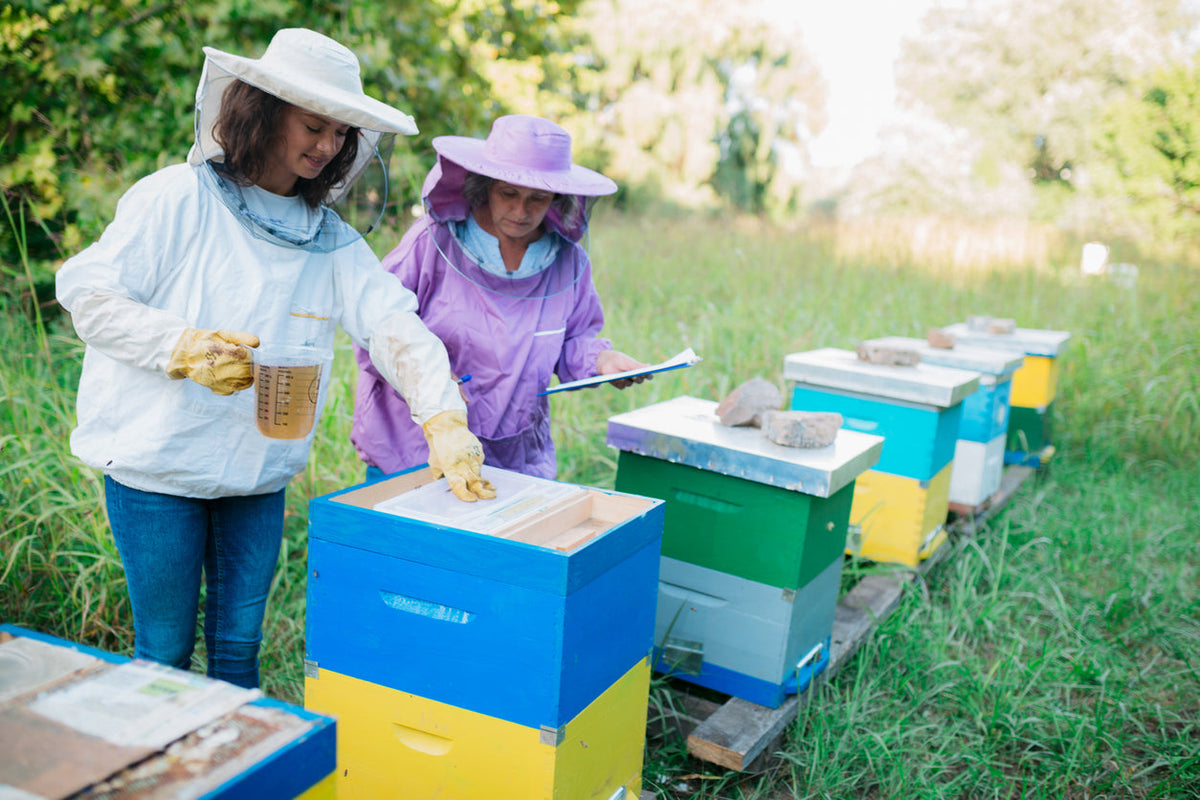
You complement your theoretical training with regular practical experience in an apiary of 10 to 25 colonies, under the guidance of a beekeeper.
You participate in the seasonal tasks and develop your judgment by discussing observations and decisions.
For experienced interns
You already have experience and want to take on more responsibility. You manage the apiary more independently, with access to your supervisor for advice and support.
The following spring: one complete hive with its bees for every two hives managed.
1 hive received for 2 hives managed
The benefit in kind for hives and bees relates to the self-sufficient formula. The responsibilities and terms are specified with SAPIQ during the selection process.
Before submitting your application
The program is designed for people who want to complement their learning with supervised hands-on experience. Motivation and availability are just as important as the desire to practice.
Have started the SAPIQ online theory course or the AEC in Beekeeping Business Management at Collège d’Alma.
Be able to regularly participate in field days from mid-May to mid-September, as well as in autumn work and winterization.
Places are limited. The interview allows us to assess your motivation, commitment, and the option best suited to your background.
Your next step
Tell us about your background, your location, and your availability. This information will help us review your application and prepare for a conversation with you.
The internship location, exact dates, fees, and applicable terms and conditions must be confirmed with SAPIQ before you commit.
Your questions
The published requirement is to have started either the SAPIQ theoretical training or the AEC in Beekeeping Business Management at Collège d’Alma. Your situation will be reviewed during the interview.
Regular monitoring is planned from mid-May to mid-September. The program also includes autumn work and participation in the winterization process in November.
The benefit is intended for subscribers to the self-service plan: one complete beehive, bees included, for every two managed hives, provided in the following spring. It does not automatically apply to the guided plan.
Enter your city or region in the form. The location, availability, fees, and terms must be confirmed with SAPIQ before you commit.
Yes. You can discover our other practical activities and choose a package suited to your level before considering a commitment for the season.
Compare training programs